Narthex
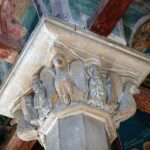
The capitals and bases of the freestanding pillars of the narthex and naos were decorated with various floral and zoomorphic motifs. The four apostles in full plastic rendering were chiseled onto the capital of the northwest pillar in the narthex along with four large birds.
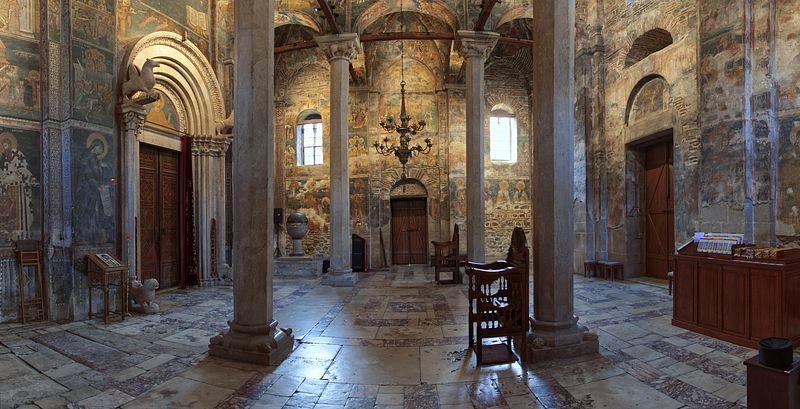
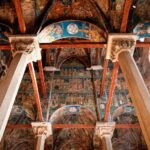
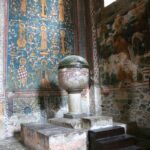
The narthex has an exceptionally rich iconographic plan. In addition to the images of saints and famous figures from the history of the Serbian people, this area includes illustrations of the Calendar of Saints, the Seven Ecumenical Councils and the Life of St. George.
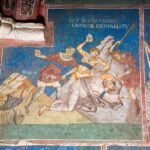
The remembrance of all the saints and the most significant events from Christian history included in the church’s annual cycle were recorded in illustrations, day by day, in the Dečani narthex. The menology or calendar usually begins with the first of September on the east wall of the narthex below the Ecumenical Councils, which are depicted in the vaults. Memorable scenes from the lives of the saints, full of dramatic dynamism, stretch in order across the walls in circular belts from the top down.
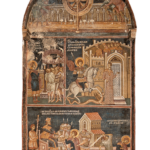
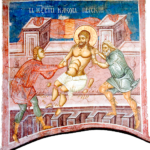
The chapel in the northern part of the narthex is dedicated to St. George. The painter, therefore, made an effort to depict the most important events from the life of this famous great-martyr on the east wall of the chapel, i.e. on its most visible section: the torture on the wheel, the killing of the dragon, the sentencing and the beheading of St. George.
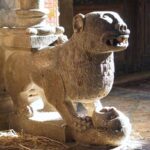
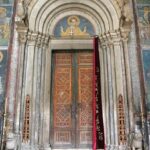
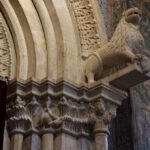
The variety of ornamental decorations on the entrance from the narthex into the naos largely contributes to the monumental appearance of the church interior. The capitals, interior and external arches of the portals are all decorated. The tympanum of this portal does not have any sculptural ornamentation. It is illustrated with an image of Christ Emmanuel. In compensation, two pairs of animals rendered in full sculpture above the portal and at its base guard the entrance to the church, protecting the border between the holy and the profane.
On the wall above the portal are the images of founders Holy Stefan of Dečani and King Dušan shown in prayerful supplication to Christ Pantocrator (the All-Maintainer) from whom they receive scrolls carried by a cherub – a sign of God’s blessing.