Narthex
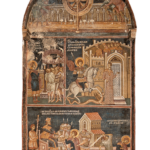
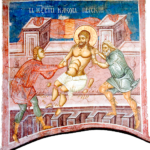
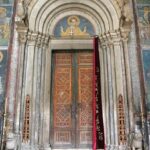
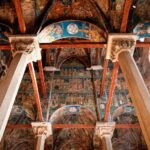
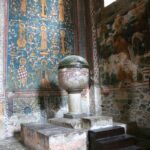
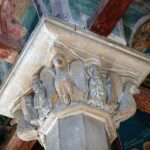
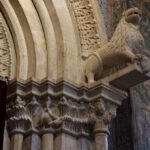
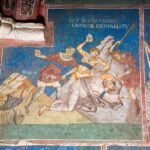
Upon entering the spacious and high narthex through any of the three doors, the visitor is found in the vestibule of the Dečani church. It is divided into three naves, separated from each other by marble pillars over six meters tall. Upon entering this area, one is astonished by many surrounding frescoes. The illustrated surfaces of the church of Dečani are almost too vast to be taken in by the human eye. All that was gradually created and perfected in Serbian and Byzantine churches over the course of decades was enhanced in Dečani to an unprecedented degree; no church, Serbian or Byzantine, had previously had so many frescoes and in no other church was the entire history of salvation depicted in a single location as completely as here. The cumulative experience of late Byzantine art was woven into over one thousand scenes and several thousand individual figures divided into more than 20 cycles. Many painters worked simultaneously or in succession on illustrating the church for about ten years (1338- 1348), which was reflected in the variety of styles and artistic quality of the fresco painting. There is no doubt, however, that at the very beginning of the illustration of the Dečani church a comprehensive thematic plan was prepared for the structure as a whole and each individual space in it, and there were few deviations from it. This is the only possible explanation for the exceptional thematic harmony and unity of the frescoes.
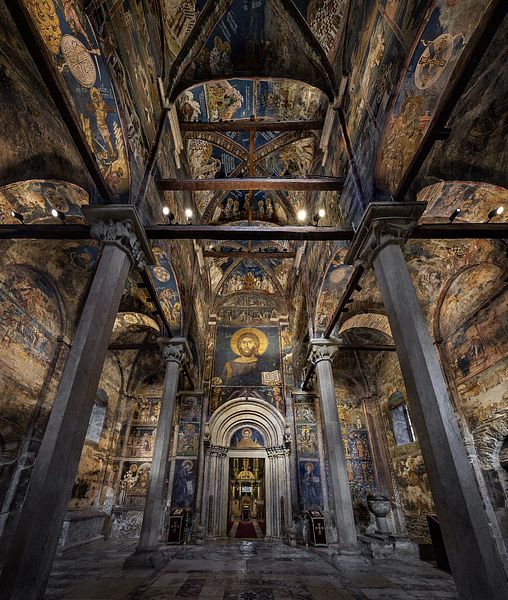
The painters, whose names were not preserved, had an excellent mastery of the techniques of their trade. Their frescoes are well bound to the underlayer, the color is lasting and it has retained its intensity and freshness despite the centuries that have passed. The use of precious painting materials contributed to the ornamentality of the church interior, which was rich: traces of gold can still be seen on halos and clothing in many frescoes, and very expensive blue azurite (lapis lazuli) was also used.