Ascension of our Lord Church
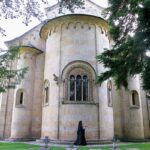
Upon entering the Church of the Ascension at Dečani Monastery, visitors encounter a masterpiece of ecclesiastical art that combines architectural brilliance with intricate sculptures, vibrant frescoes, and reverent icons. By merging Romanesque, Gothic, and Byzantine architectural traditions, which was not uncommon in Nemanjić royal churches, the master craftsmen from Kotor created a structure of unparalleled beauty and originality in design, construction, and ornamentation. The catholicon of Dečani Monastery is distinguished by its rich stone-carved decorations, the most elaborate in Serbian medieval art, and its vast gallery of frescoes, the largest of its kind from the period.
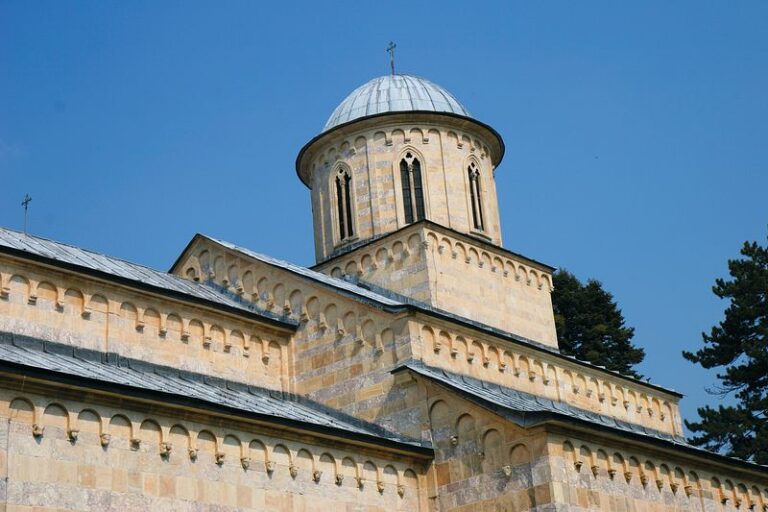
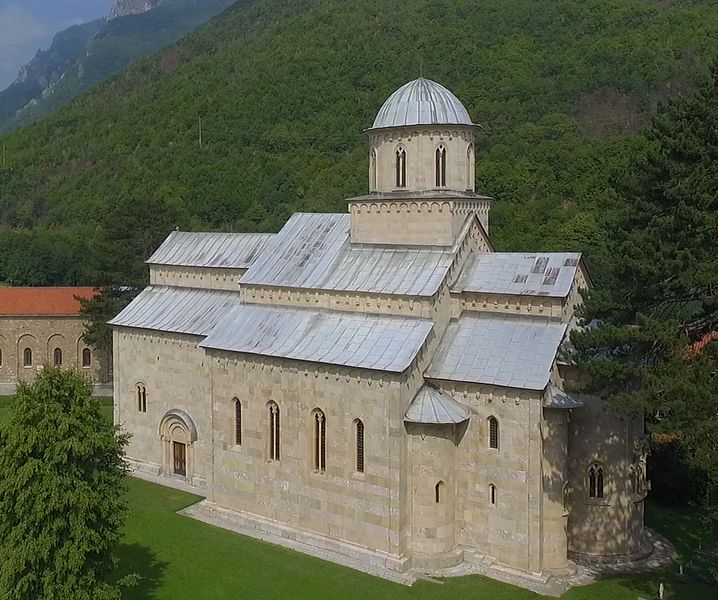
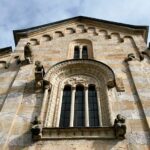
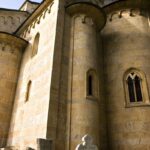
The majestic height and strength of the church, alongside the elegance of its façades and carvings, have earned it the epithet Visoki – High – by which Dečani is widely known. Central to its architectural marvel is the design of the interior, a five-nave domed basilica. The outer aisles on either end are shorter, terminating in apses of varying sizes on the eastern side. The structure’s grandeur is further enhanced by the exceptional quality of its building materials: polished, two-tone marble. The alternating rows of pale-yellow onyx from Peć and reddish-purple breccia from Dečani create a strikingly elegant façade.
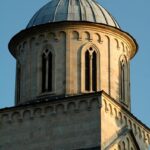
The church measures over 36 meters in length, 24 meters in width, and its dome rises to an impressive 29 meters. Liturgically, the church is divided into the altar section – sanctuary – the naos – main nave – and the narthex The naos encompasses the nave and two aisles, forming the principal liturgical space.. Stone parapets separate the two chapels dedicated to St. Nicholas (south) and St. Demetrius (north) from the central naos.
ARCHITECTURAL HARMONY AND ORNAMENTATION
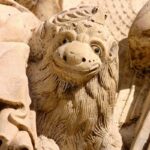
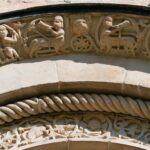
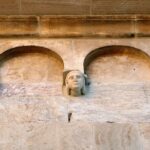
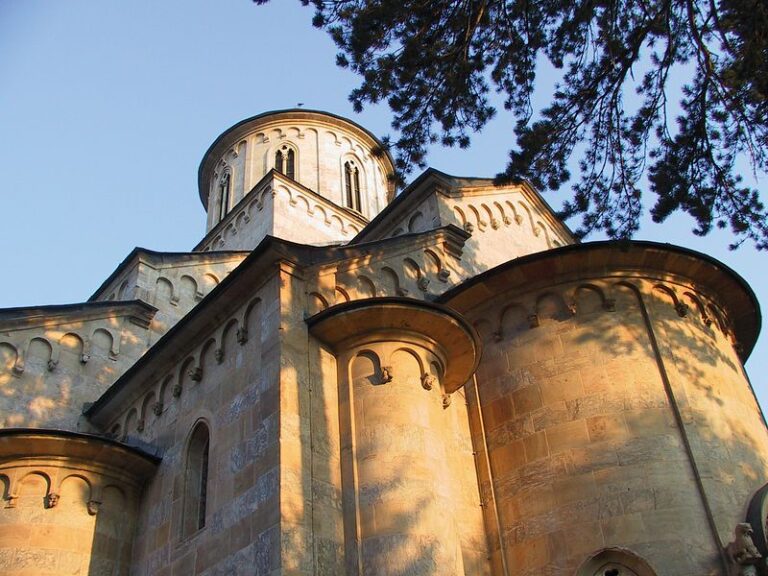
The church’s architectural harmony arises from its progressive modeling of masses: the altar section and narthex are lower, the chapels are the lowest, and the naos rises to culminate in the high dome. The sculptural decoration of the church is lavish and imaginative, featuring bas-reliefs, high-relief compositions, and fully sculpted figures. The intricate carvings include human and animal figures, mythical beings, and floral motifs, particularly visible on the hundred consoles supporting the roof cornice.
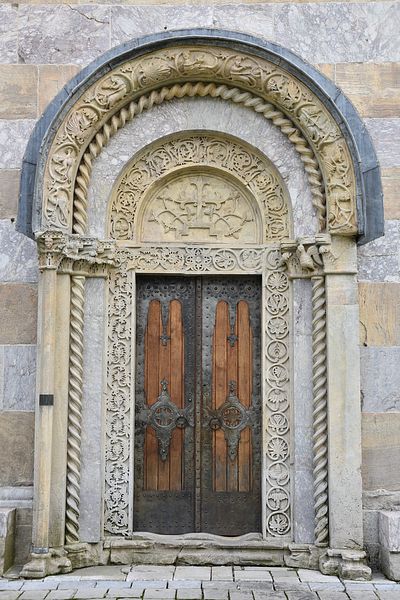
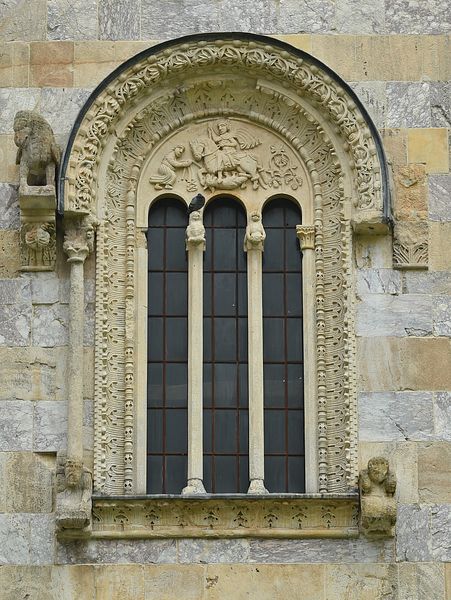
The central naves are crowned with a double-pitched roof, while the side naves have single-sloped coverings. The entire roof is sheathed in lead plates, ensuring durability and weather resistance. Large unbroken façade surfaces are punctuated with intricately designed portals and windows, adorned with sculptural elements.
WINDOWS AND PORTALS
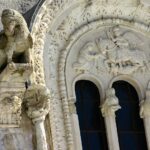
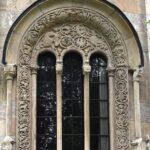
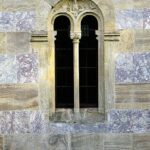
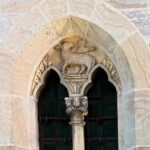
Two triple-mullioned windows stand out for their artistic complexity: one on the west façade and another on the altar apse. The tympanum of the altar window features a leafy vine motif flanked by a basilisk on one side and a dragon swallowing a man on the other. Meanwhile, the west window tympanum depicts St. George slaying the dragon, a symbol of triumph over evil. Both windows showcase exquisite carving on the sills, inner frames, and capitals, combining architectural function with symbolic meaning.
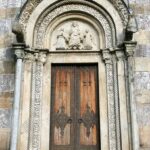
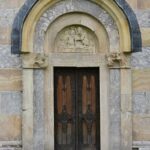
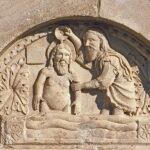
The portals of the church are equally magnificent. The south portal tympanum depicts the Baptism of Christ, framed by intricate floral patterns and the waves of the Jordan River below. The north portal, frequently used today, features rich ornamentation on the doorjambs, beams, and arches, but its tympanum displays only a flowering cross, emphasizing simplicity and devotion. Above the west entrance, a grand composition shows Christ enthroned between two angels, with lions resting at His feet. Flanking the tympanum are sculptural panels depicting a lion and a griffon.
SYMBOLISM AND LEGACY
The church’s stone ornamentation—inside and out—not only serves architectural and decorative purposes but also reflects the spiritual intent of its builders: to glorify God. Each carving, from floral motifs to mythical creatures, encapsulates symbolic meanings tied to Christian theology and the celestial order. The Ascension Church at Dečani Monastery remains a beacon of Serbian medieval artistry, a testament to the faith and craftsmanship of its creators, and an enduring symbol of Orthodox Christian heritage.